



Reading time: 5 minutes
Vibroacoustic Therapy and Sound Healing
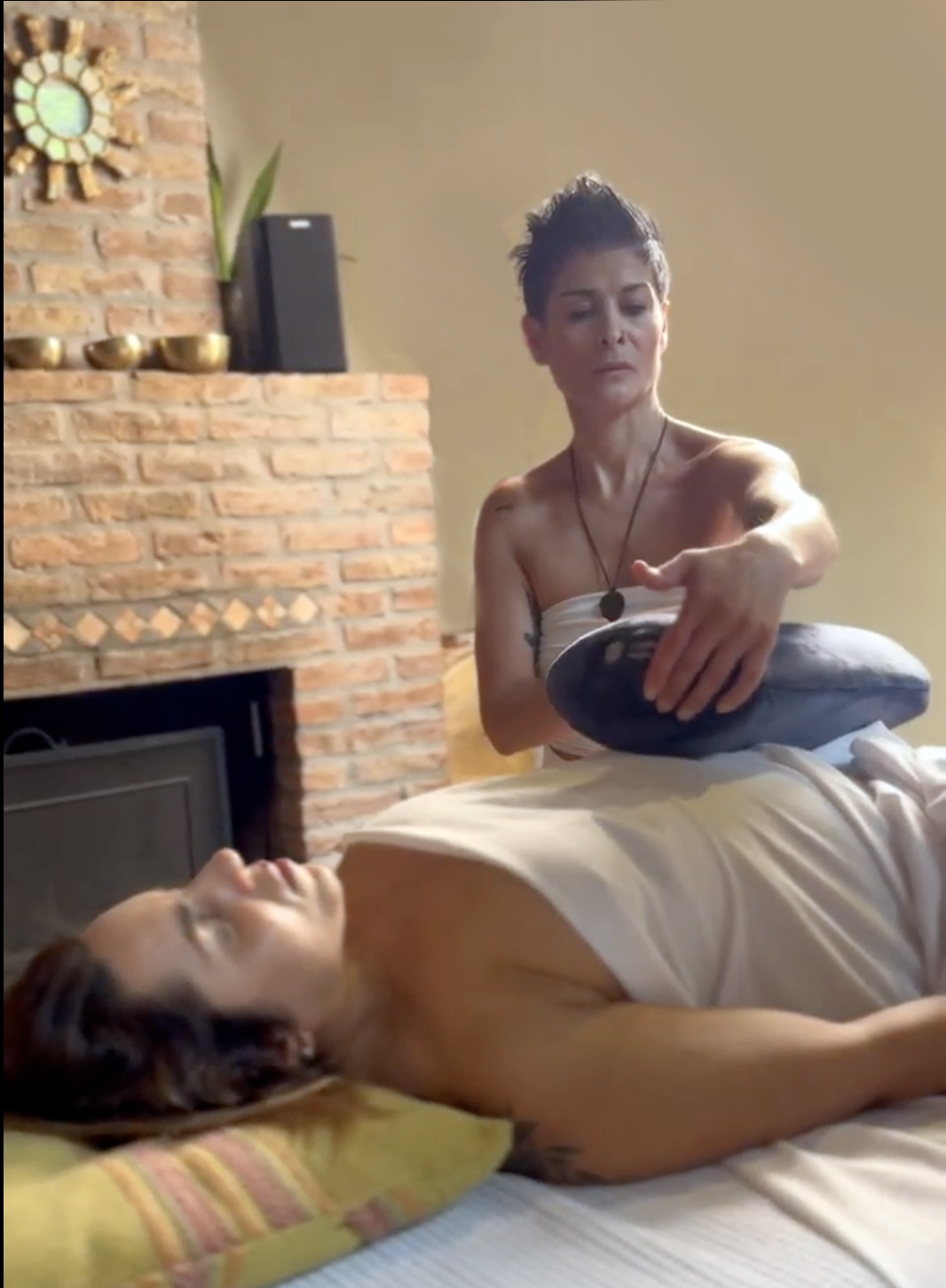
The Viset Pillow is a device created by music therapists from the University of Buenos Aires to integrate the principles of Vibroacoustic Therapy into professional Sound Healing sessions — and into everyday wellness practices. Under appropriate conditions, sound can be felt in the body as vibration, and there is a growing body of research regarding the possible benefits of this practice.
What is Vibroacoustic Therapy?
Emerging in the 1980s in Scandinavia, Vibroacoustic Therapy (VAT) is a form of music therapy that uses low-frequency sinusoidal sounds — between 20 and 100 Hz — to produce therapeutic effects. Instead of working only through auditory listening, it adds a somatic dimension: the body receives sound as vibration, through direct contact, allowing this vibration to be felt in specific areas.
Argentine music therapist Jorge Zain has developed, over the past 18 years, a disruptive model of Vibroacoustic Therapy, combining vibroacoustic technology with traditional approaches to Sound Healing and Sound Therapy. This is the foundation of Sound Vibration Work®, which he teaches in his school in Belgium and Argentina.
How does vibroacoustics work?
Vibroacoustics is based on the idea that sound waves generate resonance in the body. The frequencies used produce vibratory movement in specific areas of the body, supporting stable brain oscillations that are essential for connectivity and cognition. Rhythmic and vibratory stimulation may help regulate this activity, inducing states of calm and supporting the balance of the nervous system (Bartel et al., 2017).
What research has explored
Sleep
Insomnia affects up to 30% of the world’s population and is associated with a state of cerebral hyperarousal. A study conducted at Thomas Jefferson University in Philadelphia showed that a one-month VAT program significantly improved sleep duration and quality: participants experienced an average increase of 30 minutes of sleep per night and a measurable decrease in insomnia symptoms. Neuroimaging studies (fMRI) also observed increased functional connectivity in areas involved in sleep regulation — the thalamus and prefrontal cortex — suggesting a reduction in the state of hyperarousal (Zabrecky et al., 2020).
Pain
Vibroacoustics has shown promising results in supporting certain forms of chronic and acute pain. Frequencies such as 40 Hz generate a deep vibration that supports tissue relaxation and reduces the perception of pain. Patients supported in contexts of fibromyalgia or postoperative recovery reported a significant reduction in their pain levels — measured by the Visual Analog Scale (VAS). VAT also appears to act on brain areas related to pain regulation, such as the somatosensory cortex and the limbic system (Kantor et al., 2022).
Anxiety and nervous system regulation
Chronic stress and anxiety are linked to the constant activation of the sympathetic nervous system. By inducing a state of deep relaxation, vibroacoustics can activate the parasympathetic nervous system, helping to reduce stress and anxiety — particularly by lowering heart rate, relaxing the muscles, and supporting a reduction in cortisol levels (Boyd-Brewer & McCaffrey, 2004; Hollins et al., 2014).
How the Viset Pillow applies these principles
The Viset Pillow uses internal transducers that transform a low-frequency sound signal into vibration perceived through contact. It was designed with two complementary objectives: to help therapists transfer sound vibrations directly to the body of their patients — with their hands free for their specific approach — and to offer everyone a portable spa for deep relaxation experiences.
A treatment with the Viset Pillow simultaneously integrates:
→ Low-frequency vibration — applied to the back, lower back, neck, or abdomen depending on the goal of the session.
→ The sound and musical experience — through the Viset app or in combination with Sound Healing instruments.
→ Complementary techniques — verbal therapy, bodywork, breathwork, and many others.
To learn more about its features, recommended uses, and available programs — or to purchase it directly — you can visit the Viset Pillow page.
The role of the practitioner
Although the Viset Pillow can be used safely at home, its potential becomes more tangible in therapeutic contexts. A trained sound therapist can decide, depending on the therapeutic relationship, how to combine vibroacoustic stimulation with instruments, voice, rhythm, or breathing.
Before working with frequencies, the practitioner must have experienced them in their own body — knowing the appropriate intensity, mastering the contraindications, and understanding that each body responds differently to vibration. This is why, at Vibroacustica, we place so much importance on professional training.
Safe use
• Start with short sessions, at moderate volume and intensity.
• Do not use directly on the skull.
• Avoid use in cases of acute inflammation, pregnancy, or pacemaker use.
• Do not use while the device is charging.
• Stop in case of discomfort, dizziness, or any unusual reaction.
• Consult a healthcare professional in case of a specific medical condition.
Conclusions
Vibroacoustic Therapy is positioned as a promising field of work for integrating sound, vibration, and wellness within a structured perspective. Current studies suggest that VAT can be an interesting complementary tool to support relaxation, accompany rest processes, modulate the perception of pain, and support states of greater bodily and mental calm.
At Vibroacustica, this knowledge is integrated into Sound Vibration Work®, an approach developed by Jorge Zain that combines Vibroacoustic Therapy with Sound Healing and Sound Therapy. This method is guided by science and experience, but it requires continued research, validation, and refinement of its applications.
The Viset Pillow was born in this context: as an accessible and precise tool to bring low-frequency sound vibration closer to both professional practice and everyday wellness experience. It does not replace medical care, but it can become a valuable resource for those who wish to explore the potential of sound and vibration with knowledge, care, and sensitivity.
Bibliographic references
- Bartel, L. R., Chen, R., Alain, C., et al. (2017). Vibroacoustic stimulation and brain oscillation: from basic research to clinical application. Music and Medicine, 9(3), 153–166.
- Boyd-Brewer, C., & McCaffrey, R. (2004). Vibroacoustic sound therapy improves pain management and more. Holistic Nursing Practice, 18(2), 111–118.
- Hollins, M., McDermott, K., & Harper, D. (2014). How does vibration reduce pain? Perception, 43(1), 70–84.
- Kantor, J., Campbell, E. A., Kantorová, L., et al. (2022). Exploring vibroacoustic therapy in adults experiencing pain: A scoping review. BMJ Open, 12(1), e046591.
- Zabrecky, G., Shahrampour, S., Whitely, C., et al. (2020). An fMRI study of the effects of vibroacoustic stimulation on functional connectivity in patients with insomnia. Sleep Disorders.
Share:
Why You Should Embark on a Sound Vibration Journey
Tibetan singing bowls: real benefits beyond the claims